Materials
White gold, platinum and silver: how the three white metals differ
Alike when new, very different after a few years of wear. Composition, stamps, color over time, hardness, weight and how to tell white gold, platinum and silver apart.
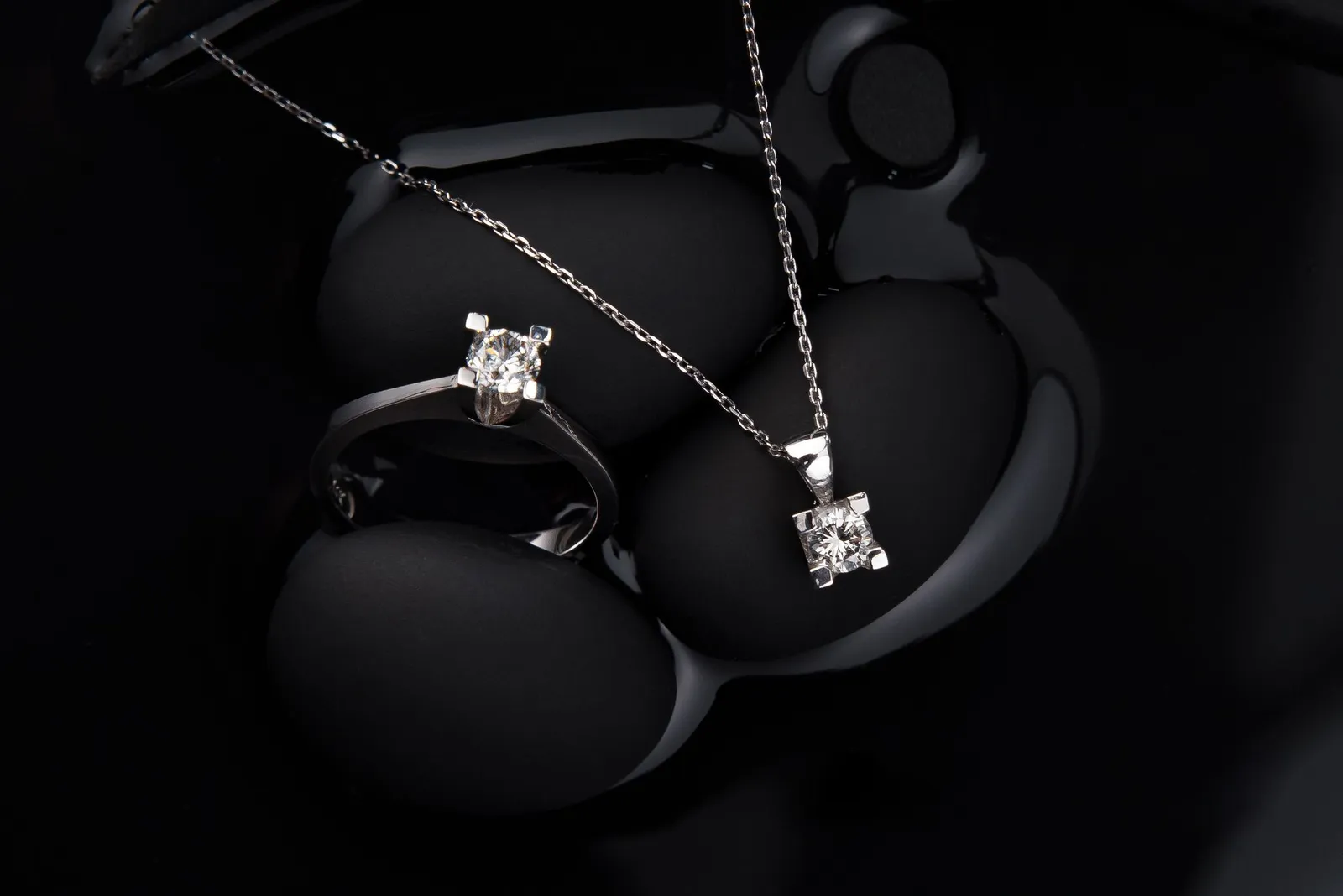
Put a brand-new white gold ring, platinum ring and silver ring side by side and it is hard to say which is which. But after a year or two of wear, the three go in very different directions in color, durability and value. Understanding these three metals avoids the most common confusion when buying white jewelry.
First: “bạch kim” is not white gold
In Vietnam, many people call white gold “bạch kim”, the word for platinum. They are different things:
- White gold is an alloy of gold with white metals.
- Platinum (Pt) is a separate precious metal that contains no gold.
- Silver is a third element, many times cheaper than the other two.
When a piece is described as “bạch kim”, ask plainly: platinum, or white gold? The stamp on the piece answers the question.
White gold
Composition
Pure gold alloyed with white metals such as palladium, nickel and silver. Karat works as for any gold alloy: 18K is 75% gold, 14K about 58.3%, 10K about 41.7%. The stamps are 750, 585, 416.
Color
Because the main ingredient is still gold, the base alloy is a slightly warm off-white. To reach the familiar bright white, white gold is usually plated with rhodium — a precious metal from the platinum family, very white and hard.
In wear
- Hard, holds prongs well, and suits heavily set jewelry.
- Rhodium wears at the points of contact; on a ring worn daily, replating is typically needed after one to two years.
- Some recipes contain nickel, which can irritate sensitive skin once the plating wears.
Platinum
Composition
Platinum jewelry is very pure, usually 90–95% platinum, with the rest made up of metals from the same family. Common stamps: Pt950, Pt900 or PLAT.
Color
A natural gray-white that needs no plating and does not change over time.
In wear
- Very heavy. Its density is about 21.45 g/cm³, against roughly 15–16 g/cm³ for 18K gold. In the same design, platinum weighs over a third more than 18K gold.
- No tarnish, no rust.
- It scratches in its own way. Platinum is ductile: when rubbed, metal is pushed aside instead of being lost, forming a characteristic soft sheen. Some people love it; others have the piece repolished periodically.
- Kind to skin thanks to its purity.
- Hard to work. Platinum’s high melting point and ductility call for dedicated equipment and skill, so labor costs more than for gold.
On price
As of early 2026, raw platinum costs only about half as much per ounce as gold. Even so, platinum jewelry is not proportionally cheaper: the piece uses nearly pure metal, weighs far more than the same design in gold, and costs more to make.
Silver
Composition
Jewelry silver is usually sterling, or 925 — 92.5% silver, the rest typically copper. Stamps: 925 or S925.
Color
When new, silver is the whitest and brightest of the three. But it reacts with sulfur compounds in air, sweat and water, forming tarnish that runs from pale yellow to black. That is why silver jewelry is often plated with rhodium or gold, and that plating wears away too.
In wear
- Soft: it scratches and dents easily, and small prongs wear and bend — not ideal for holding small stones over many years.
- Light: a density of about 10.5 g/cm³, less than half that of platinum.
- Needs regular polishing to keep its color.
- Low material value: raw silver costs many times less than gold or platinum.
At a glance
Composition and stamps
- White gold: an alloy with 41.7–75% gold — stamped 416, 585, 750.
- Platinum: 90–95% platinum — stamped Pt900, Pt950.
- Silver: 92.5% silver — stamped 925.
Color over time
- White gold: a warm off-white shows as rhodium wears; replating restores it.
- Platinum: keeps its color; the surface softens to a sheen from scratches.
- Silver: tarnishes yellow to black unless cleaned.
Hardness (Mohs scale, for reference)
- Sterling silver: about 2.5–3.
- 18K gold: about 3; 14K gold: about 3.5–4.
- Platinum: about 4–4.5.
Weight on the hand
Platinum is heaviest, white gold in the middle, silver lightest.
Maintenance
- White gold: periodic rhodium replating.
- Platinum: repolishing if you want a mirror finish.
- Silver: frequent wiping and polishing, replating when the coating wears.
How to tell them apart
- Read the stamp. The simplest way: 750/585/416 is gold; Pt950/Pt900 is platinum; 925 is silver. A piece with no stamp at all deserves careful questions.
- Hold it. At the same size, platinum is clearly heavy; silver is much lighter.
- Look where it has worn. A warm tone underneath a ring is white gold with worn rhodium; black tarnish is silver.
- Have it tested. A jeweler can measure composition with an X-ray analyzer in minutes without harming the piece.
Which one for gemstone jewelry?
- White gold is the balanced choice: real gold, hard, good at holding prongs, with three karats for different budgets. In return it needs periodic replating.
- Platinum suits those who want a naturally white metal with no plating, kind to skin, and who like real weight — and accept higher making costs.
- Silver suits fashion jewelry worn for a short time. For heavily set pieces meant to last, its softness and tarnish are two serious limits.
Three common questions
Is white gold real gold?
Yes. 18K white gold contains exactly 75% gold, like 18K yellow or rose gold; only the alloying metals differ.
Why does a white gold ring turn yellowish after a while?
The rhodium has worn and the off-white of the alloy is showing. This is a normal property of white gold; replating restores the original whiteness.
Is rhodium-plated silver the same as white gold?
No. Under the plating it is still silver, with silver’s softness and value. The plating wears away with time.
At T Gold
T Gold crafts in 10K, 14K and 18K gold in yellow, white and rose, and does not use silver — because silver tarnishes over time and does not hold value the way gold does. The karat is stated for every piece.
Refinishing is among the care services described on the Warranty & care page. The karats are compared in 10K, 14K or 18K: how to choose your gold karat.