Materials
10K, 14K or 18K: how to choose your gold karat
Karat decides the color, durability, weight on the hand and the amount of real gold in a piece. A complete guide to choosing between 10K, 14K and 18K.
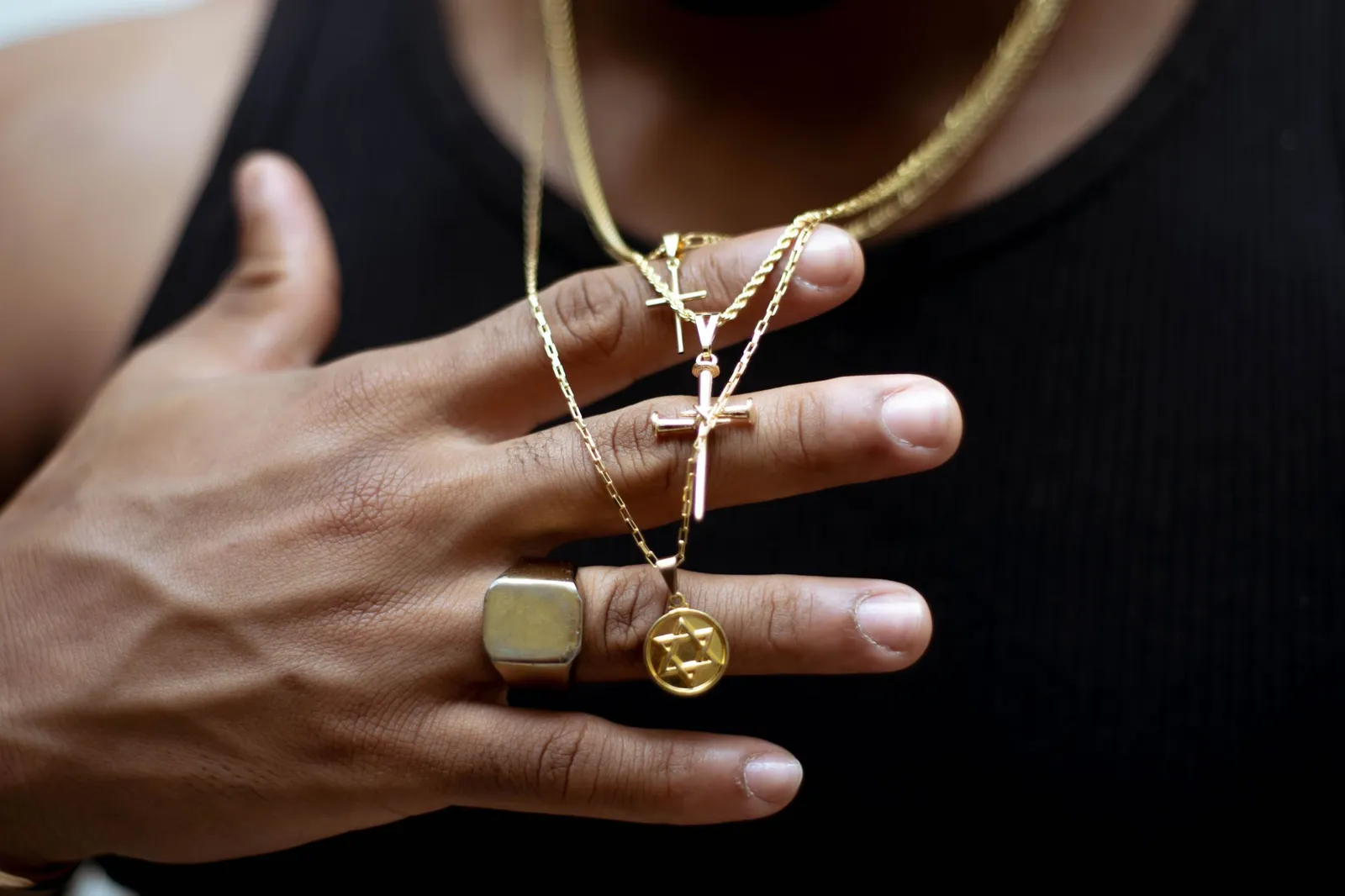
Take one ring design and make it in 10K, 14K and 18K gold, and you get three different pieces: a different shade of gold, a different weight on the hand, a different amount of pure gold inside, and a different way of aging after a few years of wear. Understanding karat means understanding what you are paying for.
What is karat?
Karat (K) measures the share of pure gold in an alloy, on a scale of 24 parts. 24K is almost pure gold; 18K means 18 of 24 parts are gold, and the rest are other metals added on purpose.
The formula is simple: gold content = karat ÷ 24.
- 18K = 18 ÷ 24 = 75% pure gold. Stamp on the piece: 750.
- 14K = 14 ÷ 24 ≈ 58.3%. Stamp: 585.
- 10K = 10 ÷ 24 ≈ 41.7%. Stamp: 416 or 417.
The numbers 750, 585 and 416 express fineness in parts per thousand. When you see them inside a ring or on a chain clasp, that is the karat of the piece.
Terms you will hear in Vietnam
- “Vàng ta”: 24K gold (9999, 999) — bought as a store of value, rarely used for gemstone jewelry.
- “Vàng tây”: the everyday name for gold alloys such as 10K, 14K and 18K.
- Gold “age” (tuổi vàng): a traditional 10-point scale. 24K is “10”, 18K is “7.5”, 14K is about 5.8 and 10K about 4.2.
- White gold is not platinum. White gold is a gold alloy; platinum is a different metal altogether.
Legally, under Vietnam’s Circular 22/2013/TT-BKHCN, a product must contain at least 8K (33.3%) gold to be sold as gold jewelry; the gold content must be declared, stamped on the piece or stated on its label, together with the weight of the gold and of any gemstones set in it.
Why fine jewelry is not made in 24K
Pure gold is very soft — only about 2.5 to 3 on the Mohs hardness scale. A 24K ring dents and scratches easily and, more importantly, soft prongs cannot hold gemstones securely through years of daily knocks.
Adding silver, copper, zinc or palladium makes the alloy many times harder and springier. The “non-gold” part is therefore not something taken away — it is what lets a piece keep its shape, keep its prongs, and come in three different gold colors.
How 18K, 14K and 10K differ in wear
Color
The higher the gold content, the deeper and warmer the color. 18K has the richest yellow. 14K is slightly softer but still warm. 10K is paler and a touch brighter. Side by side the difference is visible; worn alone it is harder to tell — especially in white gold, where a rhodium finish makes all three karats look nearly identical.
Hardness and holding shape
In general, 10K and 14K are harder and more scratch-resistant than 18K. But hardness depends on more than the karat number: the alloy recipe, the gold color and how the metal is worked all matter. So the right question is not “which karat is hardest” but “what does this design need”:
- Designs with many small gemstones and fine prongs: a harder alloy keeps prongs from wearing down or bending.
- Thick, bold designs with few delicate details: 18K is perfectly durable when made with enough metal.
Weight on the hand
This is the point most people miss. Gold is nearly twice as dense as the metals it is alloyed with, so in the same design, a higher karat means a heavier piece. Reference densities: 24K about 19.3 g/cm³, 18K about 15.2–15.9, 14K about 12.9–14.6, 10K about 11.3–11.7.
In other words, the same ring is roughly 15–20% heavier in 18K than in 14K, and noticeably more substantial than in 10K.
Color stability
Pure gold barely reacts with its environment. What can tarnish are the alloying metals, especially copper and silver. So the lower the karat, the more easily the surface dulls with sweat, perfume, cosmetics, seawater or pool chlorine. 18K holds its color best; 10K needs cleaning and repolishing more often. This dulling sits on the surface and is removed when the piece is refinished.
Sensitive skin
Most reactions to jewelry come from nickel, which is present in some white gold recipes. A higher karat means less alloying metal, so 18K is usually kinder to sensitive skin. If jewelry has ever caused itching or redness, tell your specialist first so the karat and gold color can be chosen accordingly.
Same design, how much real gold?
This is what drives the material value of a piece. Take a men’s ring that weighs 10 grams in 14K gold:
- In 14K: 10 g × 58.3% ≈ 5.8 grams of pure gold.
- In 18K: the same design weighs about 11.7 g × 75% ≈ 8.8 grams of pure gold.
- In 10K: about 8.7 g × 41.7% ≈ 3.6 grams of pure gold.
Put differently, the same design holds about one and a half times as much pure gold in 18K as in 14K, and more than twice as much as in 10K. These figures are estimates for illustration; real weights depend on the alloy recipe and the design. But they explain why the price gap between karats is wider than many expect — and why it is worth asking for the gold weight, not just the karat.
Where the three gold colors come from
An alloy’s color is set by the metals mixed into it, not by a coating.
- Yellow gold: gold with a balanced mix of silver and copper, keeping the classic color. No plating needed, and the easiest to refinish.
- White gold: gold alloyed with white metals such as palladium or nickel. The base alloy is a warm off-white, so it is usually finished with a layer of rhodium for a bright white look. Rhodium wears with time — on a ring worn daily, typically after one to two years — and is reapplied to restore the whiteness.
- Rose gold: gold with a higher share of copper for a warm pink tone. No plating needed; the color may deepen very slightly over the years.
Gold color also changes how gemstones look: white gold sets off the whiteness of a stone, while yellow and rose gold add warm contrast that suits designs meant to show off the material.
Choosing a karat by how you wear it
There is no “best” karat — only the one that suits the design, the budget and your habits.
Lean toward 18K when
- You want a deep gold color, a clear sense of material and a substantial feel.
- The amount of real gold in the piece matters most.
- Your skin is sensitive to metals.
- The piece marks a milestone: an engagement ring, wedding bands, an anniversary gift.
Lean toward 14K when
- The design carries many gemstones and needs durable prongs.
- You wear it daily and want a balance of color, durability and cost.
- You would rather put the budget into a bolder form or larger gemstones.
Lean toward 10K when
- You want real scale — a thick chain, a large pendant, a wide ring — within a sensible budget.
- The piece is worn constantly and takes knocks.
- You accept a paler gold and regular cleaning and refinishing.
Common misconceptions
“10K isn’t real gold”
10K is real gold, above the 8K threshold that Vietnamese regulation uses to define gold jewelry. It is entirely different from plated gold — a very thin layer of gold over another metal that eventually wears away. In 10K, 14K or 18K, gold runs evenly through the whole piece.
“18K is always better”
18K has more gold, deeper color and better color stability. But for a design fully covered in small gemstones on fine prongs and worn every day, a harder alloy can be the wiser choice. “Better” depends on the piece.
“White gold is naturally white”
The bright white of white gold comes from its rhodium finish. When that finish wears, the warm off-white of the alloy shows through — a normal property of the material, not a defect.
Five questions to ask before you choose
- What karat is this piece, and where is the karat stamp?
- What is the gold weight, excluding gemstones?
- If the same design is made in another karat, how do weight and price change?
- For white gold: is it rhodium-finished, and how is replating supported?
- How do refinishing, resizing and repair work under the warranty?
How T Gold works with karat
T Gold crafts in 10K, 14K and 18K gold, in yellow, white and rose. The karat and gold weight are stated for every piece, and most designs can be made in a different karat or gold color on request.
When advising, a T Gold specialist looks at the form of the piece, the density of gemstones and the way you wear it to recommend the configuration that fits you. See the comparison on the Materials & certification page, or read about refinishing and resizing on the Warranty & care page.