Gemstones
Carat and millimeters: a gemstone size chart by shape
Carat is weight, millimeters are size. Conversion charts for rounds, accent stones and other shapes, why 2 carats is not twice as big as 1, and how to read sizes for Moissanite.
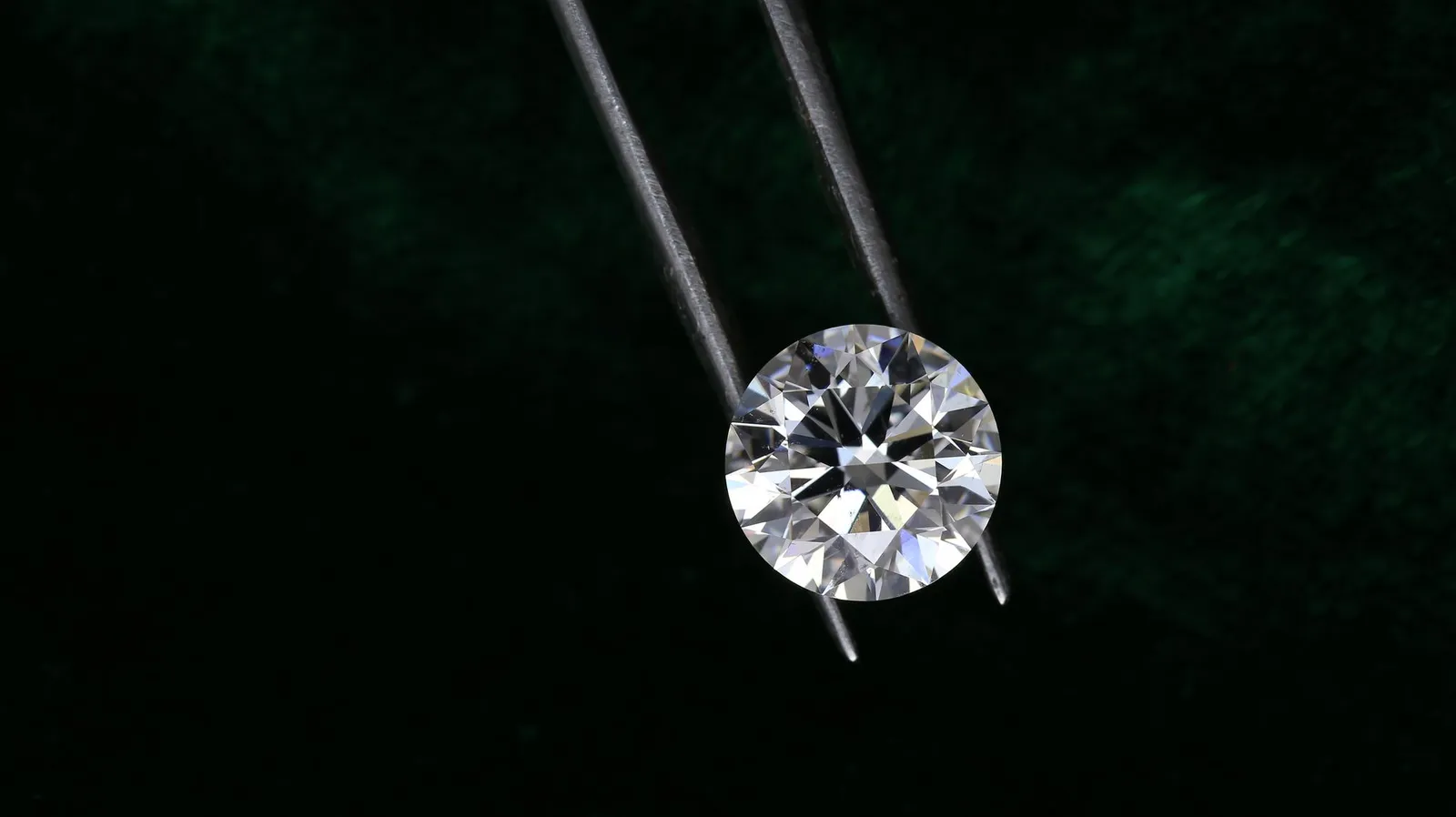
“How many millimeters is it?” and “how many carats is it?” sound like the same question but measure two different things. Carat is weight. Millimeters are size — what the eye actually sees on the hand. This guide is a reference chart for converting between the two, for round stones, small accent stones and other shapes.
Three things to remember before using the charts
- 1 carat = 0.2 grams = 100 points. A 0.50-carat stone is also called a 50-pointer.
- In Vietnam, size is quoted in “ly”, meaning millimeters. A “5 ly 4” stone is 5.4 mm across.
- Every conversion chart is approximate. Two stones of the same diameter can differ by a few percent in weight because one is cut deeper or shallower. The exact figures for a specific stone are always on its certificate.
The charts below are for diamond (lab and natural are the same). Moissanite has its own section near the end.
Round stones: millimeters to carats
The most-used chart, at the sizes commonly quoted in Vietnam:
- 3.6 mm ≈ 0.17 carats
- 4.1 mm ≈ 0.25 carats
- 4.5 mm ≈ 0.35 carats
- 5.0 mm ≈ 0.47 carats
- 5.4 mm ≈ 0.60 carats
- 6.0 mm ≈ 0.80 carats
- 6.3 mm ≈ 0.93 carats
- 6.5 mm ≈ 1.00 carat
- 6.8 mm ≈ 1.20 carats
- 7.2 mm ≈ 1.40 carats
- 8.1 mm ≈ 2.00 carats
- 9.0 mm ≈ 2.70 carats
- 10.0 mm ≈ 3.70 carats
To estimate a size not listed, use the trade’s familiar formula for round brilliants:
carats ≈ diameter × diameter × depth × 0.0061 (in millimeters).
On a well-proportioned stone, depth is about 61% of the diameter. A 6.5 mm stone that is 3.97 mm deep gives 6.5 × 6.5 × 3.97 × 0.0061 ≈ 1.02 carats.
Accent stones: the small ones
On fully paved jewelry each stone is tiny, but there are many. The chart for small rounds:
- 1.0 mm ≈ 0.005 carats
- 1.3 mm ≈ 0.01 carats
- 1.5 mm ≈ 0.015 carats
- 1.8 mm ≈ 0.025 carats
- 2.0 mm ≈ 0.03 carats
- 2.5 mm ≈ 0.06 carats
- 3.0 mm ≈ 0.10 carats
From this you can estimate the total weight of a piece: 120 stones of 1.5 mm come to about 120 × 0.015 = 1.8 carats. That is why “2 carats total” in accent stones looks — and costs — very different from a single 2-carat center stone.
Other shapes
Reference sizes at two common weights, given as length × width:
- Round: 0.5 carats ≈ 5.1 mm · 1 carat ≈ 6.5 mm
- Oval: 0.5 carats ≈ 6 × 4 mm · 1 carat ≈ 7.7 × 5.7 mm
- Emerald: 0.5 carats ≈ 6 × 4 mm · 1 carat ≈ 7 × 5 mm
- Pear: 0.5 carats ≈ 6 × 4 mm · 1 carat ≈ 8 × 5.5 mm
- Marquise: 0.5 carats ≈ 8 × 4 mm · 1 carat ≈ 10 × 5 mm
- Princess: 0.5 carats ≈ 4.4 mm · 1 carat ≈ 5.5 mm
- Square cushion: 0.5 carats ≈ 4.5 mm · 1 carat ≈ 5.5 mm
- Asscher: 0.5 carats ≈ 4.4 mm · 1 carat ≈ 5.5 mm
For elongated shapes the figures vary a good deal with each stone’s length-to-width ratio. Choosing a shape is covered in Choosing an engagement ring: center stone shapes and settings.
Why 2 carats is not twice as big as 1 carat
Weight grows with volume — three dimensions — while the eye sees only the top — two dimensions. Doubling the weight increases each dimension by only about 26%.
- A 1-carat round: about 6.5 mm.
- A 2-carat round: about 8.1 mm — a quarter wider, with roughly 55% more visible area.
- A 0.5-carat round: about 5.1 mm — only about a fifth narrower than a 1-carat.
The practical result: the difference between 0.9 and 1.0 carats is about 0.2 mm, almost invisible, while prices usually jump at round numbers such as 0.5, 1.0 or 2.0 carats. Choosing a stone just under the mark is a common way to save.
Same carat weight, which looks bigger?
Two 1-carat rounds can measure 6.2 mm or 6.6 mm across. A stone cut too deep “hides” weight in its pavilion and faces up smaller; one cut too shallow is wide but less bright. So when comparing two stones, look at both carat weight and millimeter measurements — the Measurements line on the certificate. How to read it is in How to read a gemstone certificate.
Moissanite: go by millimeters, not carats
Moissanite is about 9% lighter than diamond at the same size. A 6.5 mm Moissanite weighs only about 0.9 carats, yet looks exactly as large as a 1-carat diamond.
That is why Moissanite is usually sold by its size in millimeters, sometimes with a “diamond-equivalent carat” figure. When buying Moissanite:
- Ask for the size in millimeters — it is the number that decides how large the stone looks.
- If the seller says “1 carat”, ask whether that is actual weight or diamond-equivalent size.
- The round chart above still works: the millimeter column gives the size, and the carat column then reads as the equivalent size.
The two gemstones are compared in Moissanite, Lab Diamond or natural diamond?
One stone’s weight versus total weight
A specification sheet may state either:
- Center stone weight: for one stone only.
- Total weight: all the stones in the piece added together. For earrings this figure usually covers the pair — “1 carat total” earrings are two stones of 0.5 carats each, about 5 mm.
When comparing two pieces, make sure you are comparing the same kind of figure.
Which size for which piece?
Common ranges to help you picture it, not rules:
- Center stone, women’s ring: 5 to 6.5 mm.
- Center stone, men’s ring: 6.5 to 9 mm.
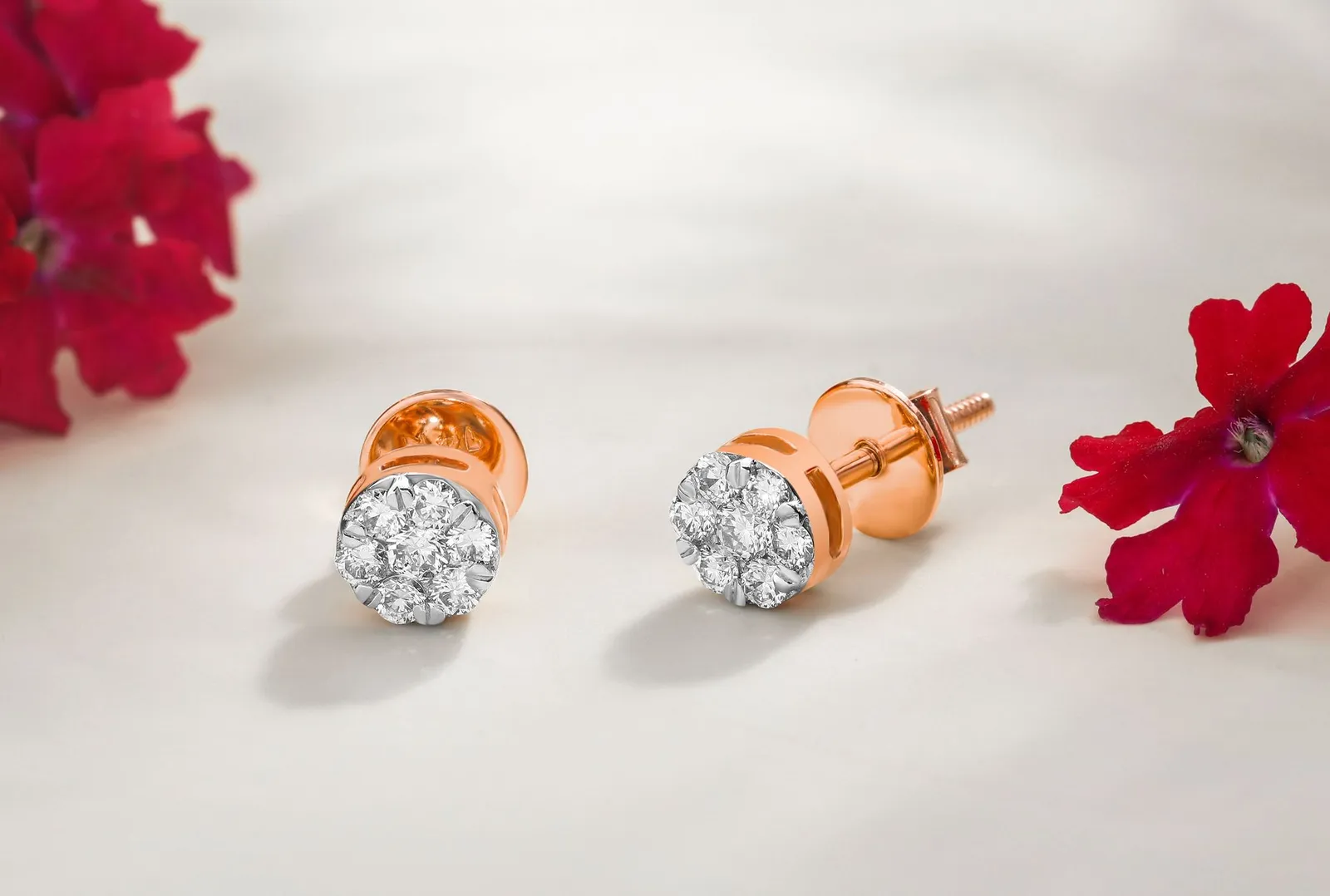
- Stud earrings: 4 to 6.5 mm per side.
- Tennis chains and bracelets: 2 to 5 mm per stone.
- Accent stones covering a surface: 1 to 2 mm.
Measuring a stone yourself
- Use calipers that read to 0.1 mm or finer. An ordinary ruler is not accurate enough for something this small.
- Measure across the widest point; for a round, measure in two directions at right angles and average them.
- A mounted stone can only be measured across, and prongs or a rim may cover part of the edge. Treat the result as an estimate.
Frequently asked questions
How many millimeters is 1 carat?
For a round diamond, about 6.5 mm. In the Vietnamese market a 6.3 mm stone is also commonly called “a one-carat”, although its actual weight is slightly lower.
How many carats is 5 mm?
About 0.47 carats for a round, usually rounded to half a carat.
Is there much difference between 6.3 mm and 6.5 mm?
In size, only 0.2 mm, almost invisible. In weight, about 0.93 against 1.00 carats.
Why do two stones of the same diameter differ in carat weight?
Because their depths differ. Conversion charts assume well-proportioned stones; real stones can be deeper or shallower.
At T Gold
The gemstone specifications on every T Gold piece state the gemstone type, size and count — so you know how large a stone is, not only how much it weighs. In the 3D design tools (currently in Vietnamese) you can change the center stone size and see the proportions on the model before deciding.