Buying guides
Choosing an engagement ring: center stone shapes and settings
Round, oval, emerald or pear? Nine center stone shapes, which look larger at the same carat, length-to-width ratios, the bow-tie effect and how to choose the setting.
The center stone is the first thing anyone sees on an engagement ring, and its shape sets almost the whole character of the ring: classic or modern, fiery or refined, delicate or bold. Choose the shape first, then the setting — the rest becomes much easier.
Shape and cut: two different things
- Shape is the outline seen from above: round, oval, rectangular, pear and so on.
- Cut style is how the facets are arranged, and it falls into two families:
- Brilliant cuts: many triangular and kite-shaped facets producing countless small flashes. Strong sparkle, and good at hiding inclusions.
- Step cuts: long, parallel facets like steps, producing broad, mirror-like flashes of light and dark. Elegant and clear, but everything inside the stone is on show.
Knowing these two families is enough to predict what a stone will “say” on the hand.
Nine popular shapes
The sizes below are reference measurements for a 1-carat stone; actual figures vary with proportions.
Round
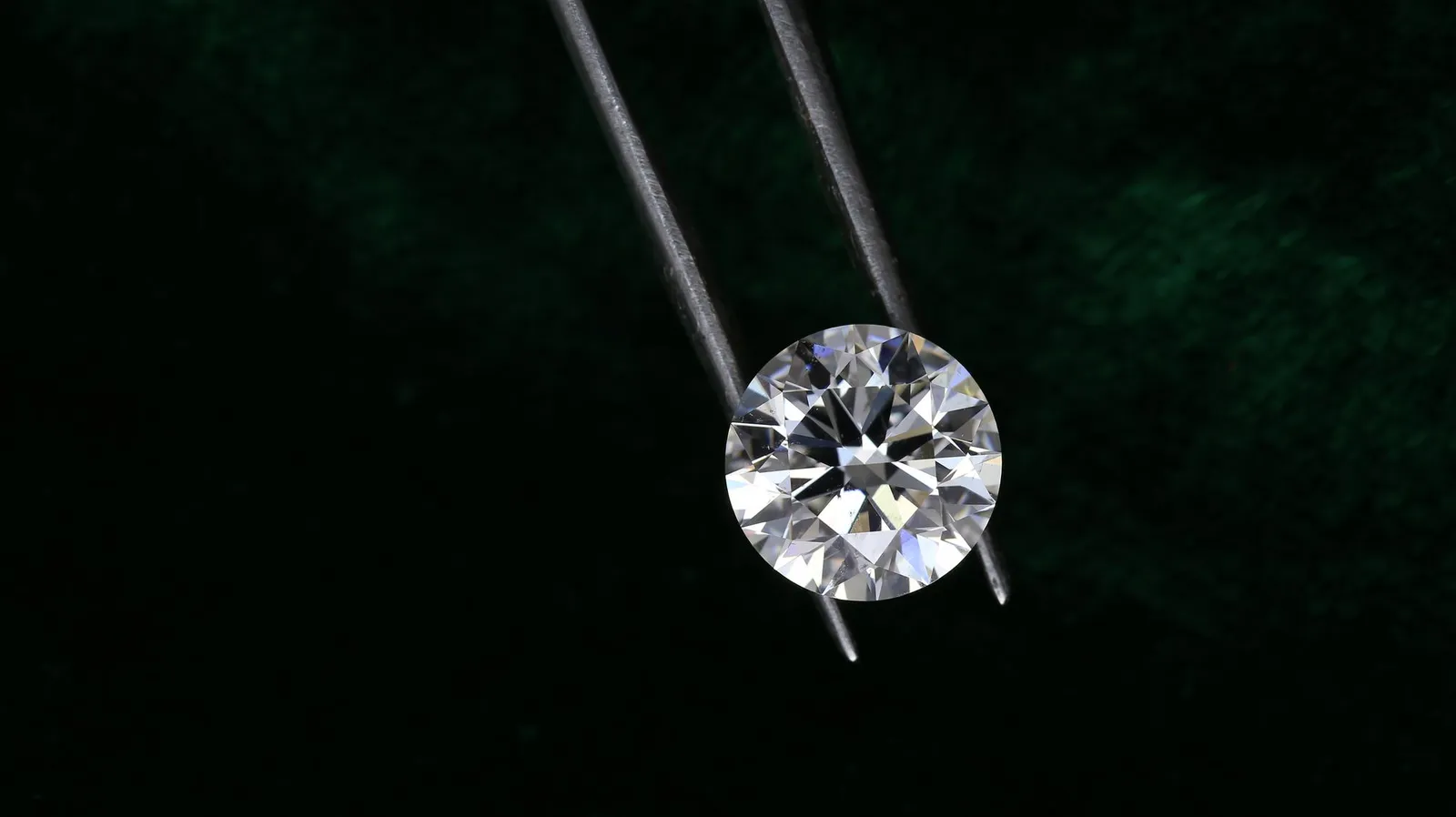
About 6.5 mm. A brilliant cut with 57–58 facets, optimized to return the most light — the most sparkling and most popular shape. It also has the highest price per carat, because more rough is lost in cutting. It suits every setting and every hand.
Oval
About 7.7 × 5.7 mm. Nearly as bright as a round but stretched, so it looks larger than a round of the same carat weight and slims the finger. With no pointed corners, it wears well.
Emerald
About 7 × 5 mm. A rectangle with cut corners, step cut. It does not sparkle in the fiery sense; it reflects long flashes of light, refined and calm. Because the table is wide and as clear as a window, clarity of VS or better is worth prioritizing.
Cushion
About 5.5–6 mm when square. A square or rectangle with rounded corners, like a pillow, with a classic, soft look. It comes in both square and elongated versions.
Princess
About 5.5 mm. A sharp-cornered square with brilliant faceting, modern and bright. The four pointed corners are its weak spot: they need prongs to protect them from chipping.
Pear
About 8 × 5.5 mm. One rounded end, one point. Very flattering on the finger; the point usually faces the fingertip and needs a V-prong.
Marquise
About 10 × 5 mm. Long, with two points — the shape that looks largest per carat. A strong personality; both points need protection.
Radiant
A rectangle or square with cut corners like an emerald, but with brilliant faceting. It combines the outline of an emerald with the sparkle of a round, hides inclusions well and has no sharp points.
Asscher
About 5.5 mm. A square with cut corners, step cut — a “square emerald”. From above it shows very distinctive concentric steps. As with emerald, higher clarity is the better choice.
Same carat, which looks bigger?
Carat is weight, not size. At the same 1 carat:
- Look largest: marquise, pear, oval — the weight is spread along the length.
- In the middle: round, emerald, radiant.
- Look smaller: princess, square cushion, asscher — more of the weight sits in the depth below.
If the priority is a center stone that looks large on the hand for a given budget, elongated shapes are the efficient choice.
Length-to-width ratio
For elongated shapes, this ratio decides whether a stone looks full or slender. Commonly preferred ranges:
- Oval: 1.35 – 1.50
- Emerald: 1.30 – 1.50
- Pear: 1.45 – 1.75
- Marquise: 1.75 – 2.15
- Square cushion, princess, asscher: 1.00 – 1.05
These are reference ranges, not rules. The right ratio is the one that looks right to you in person.
The “bow-tie” effect
Ovals, pears and marquises often show a dark, bow-tie-shaped area across the middle of the stone, where light leaks out. Almost every stone has one to some degree; what to avoid is a bow-tie so dark that it shows from every angle. Certificates do not grade it, so these shapes need to be seen in person or on video before you choose.
How shape changes your 4Cs choices
- Clarity: step cuts (emerald, asscher) show inclusions most clearly; brilliant cuts hide them better, so you can go a grade lower with no visible difference.
- Color: elongated shapes tend to hold color more visibly at the ends. In a white gold setting, choose a slightly higher color grade than you would for a round.
- Cut: GIA’s overall cut grade applies to standard round brilliants. For other shapes, rely on polish, symmetry and what you see.
How to read these entries is covered in How to read a gemstone certificate.
Choosing the setting
Solitaire
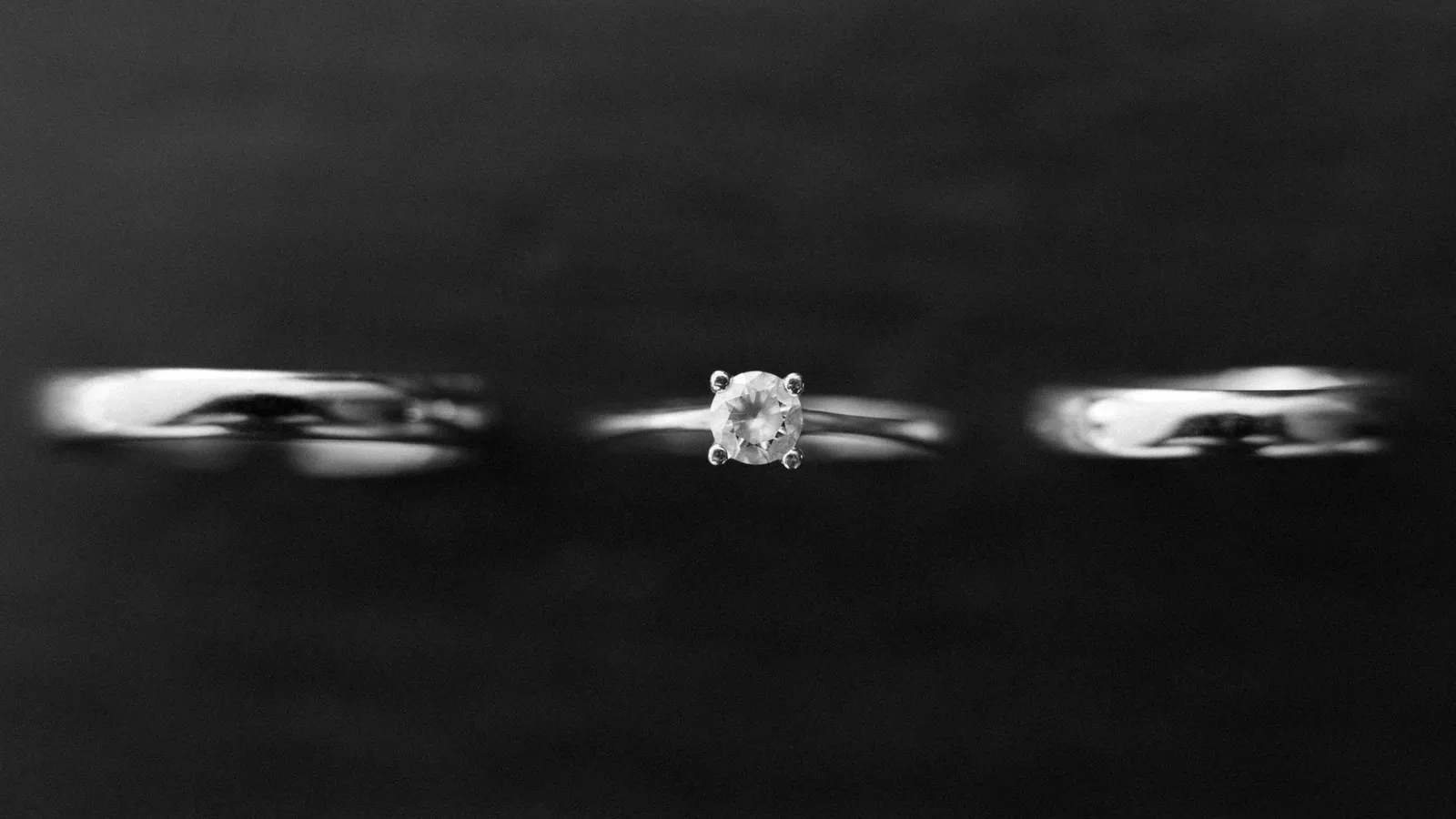
The center stone stands alone on four or six prongs. Timeless, easy to clean, and the most flattering to the stone. Four prongs show more of the stone; six are safer.
Halo
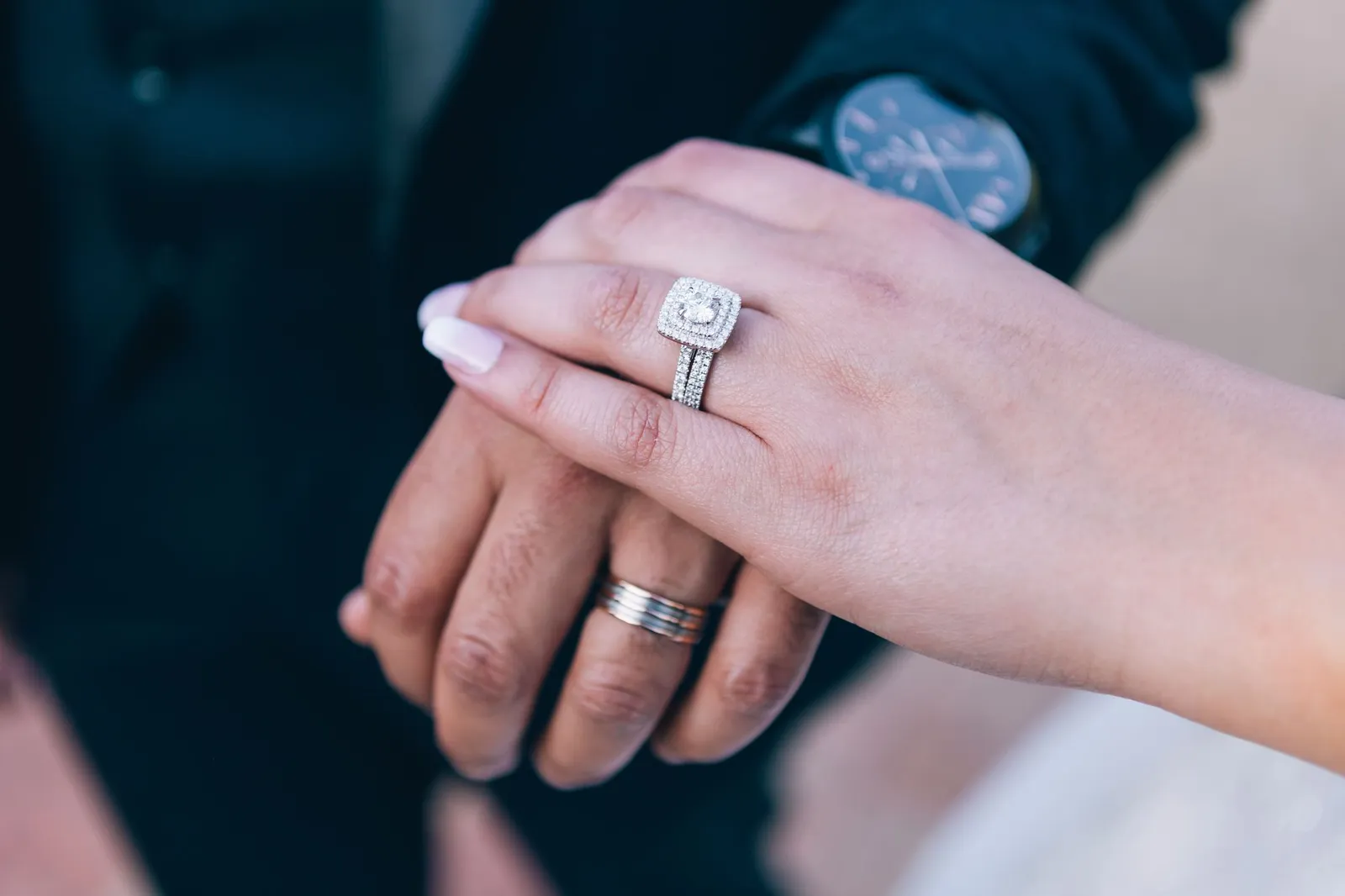
A ring of small stones around the center stone makes it look clearly larger and brighter. A double halo multiplies the effect. For maximum presence.
Hidden halo
The ring of stones sits below the center stone’s girdle and shows only from the side. It keeps the simplicity of a solitaire from above and adds a private detail up close.
Three-stone
A center stone with a side stone on each side — round, pear or tapered baguette. Wider across, covering more of the finger.
Bezel and half-bezel
A rim of metal around the center stone. The best protection, nothing to catch, ideal for active hands.
Toi & Moi
Two center stones side by side, often of different shapes. A distinctive choice, meaning “you and me”.
The band
A plain band lets the center stone lead. A stone-set band raises the overall brightness but needs periodic prong checks and is harder to resize. Each setting technique is explained in Gemstone settings.
High or low setting?
A high setting shows off the stone and gathers more light, but knocks and catches more easily. A low setting is neat, durable and easy to wear daily. For people who work with their hands, a low setting or a bezel is the practical choice.
Matching hand and lifestyle
- Shorter or wider fingers: elongated shapes such as oval, pear and marquise have a slimming effect.
- Long, slender fingers: almost any shape works; square and east-west shapes look well balanced.
- Active, hands-on days: favor shapes without points — round, oval, cushion — and a low setting.
- A taste for understatement: emerald or asscher in a solitaire.
- A taste for presence: round or oval with a halo.
Think ahead to the wedding band
An engagement ring is usually worn with the wedding band on the same finger. Some low settings or large halos keep the wedding band from sitting flush, leaving a gap. If you want the two to sit together, choose a setting high enough for the band to slide under, or a curved wedding band that follows the center stone. See Choosing wedding bands as a pair.
Choosing the gemstone
Every shape above can be Moissanite, Lab Diamond or natural diamond. This choice affects the budget more than any other factor; the full comparison is in Moissanite, Lab Diamond or natural diamond?
If you do not know their ring size
See the discreet methods in How to measure ring, chain and bracelet size at home. When in doubt, a solitaire on a plain band is the easiest design to resize later.
Preview it in 3D at T Gold
On the Custom page, T Gold’s engagement ring design tool (currently in Vietnamese) lets you choose the center stone shape, carat size, gemstone, setting, side stones and band, then turn the 3D model to see it from every angle before sending the design. It is the quickest way to see how an oval in a halo differs from an emerald in a solitaire.
Once you have a direction, book a consultation to see real stones under the lights — because the best center stone is the one that looks best to your own eyes.