Care
Caring for gold jewelry set with gemstones
Why jewelry loses its sparkle, a ten-minute clean at home, when to take it off, how to store it and the signs that call for an immediate check.
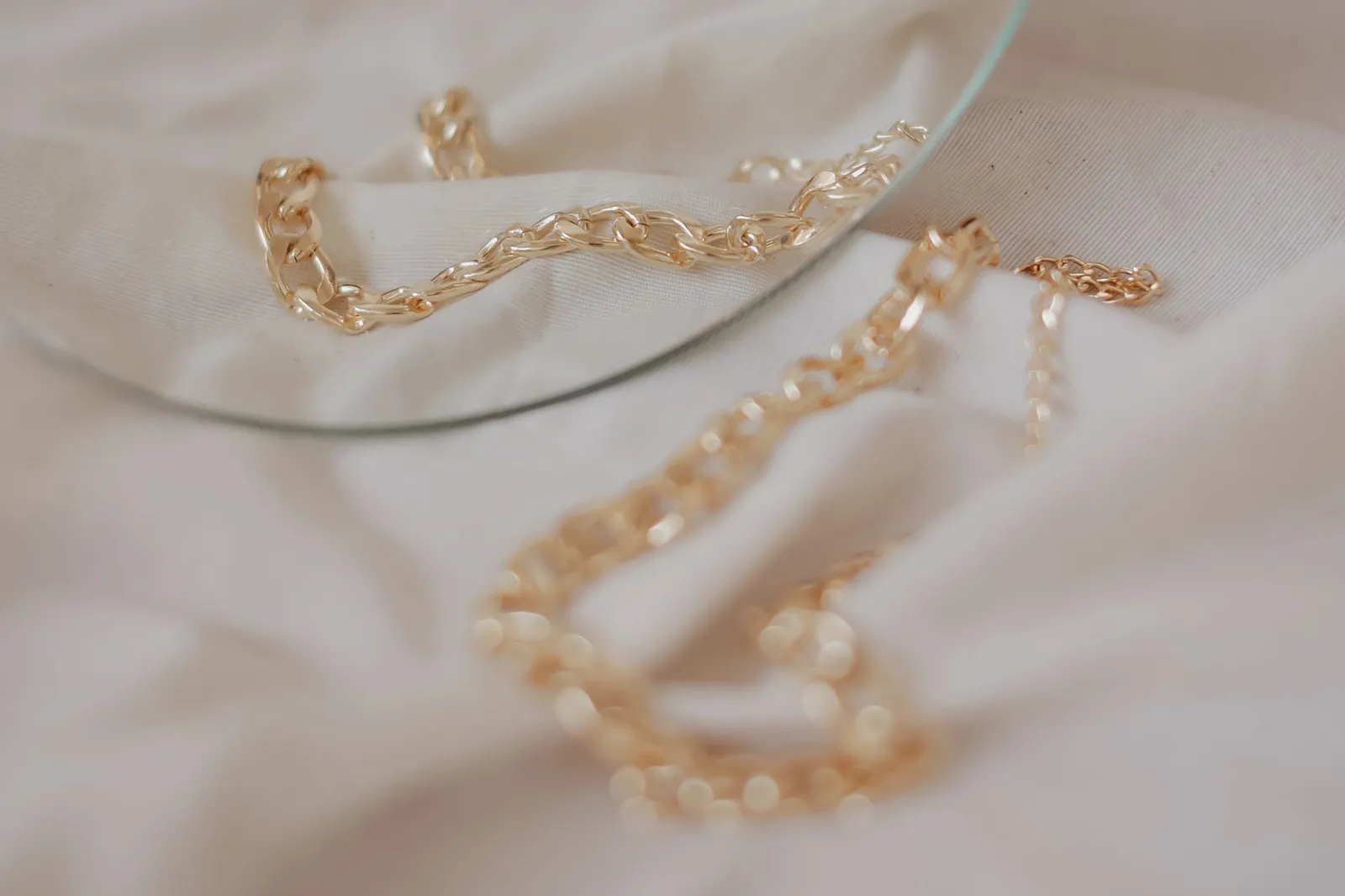
Gold does not rust, and diamonds and Moissanite do not cloud by themselves. Yet after a few months of wear, many pieces look noticeably duller than the day they were collected. The cause is almost always a film on the surface and the way the piece is worn — both of which can be dealt with. This is a complete care routine for gold jewelry set with gemstones.
Why jewelry loses its sparkle
- A film on the stones. Skin oils, lotion, soap and dust cling to the facets, especially on the underside of the stone — where light is reflected back. Diamonds also attract grease, so they get dirty faster than most people expect. Even a thin film is enough to make a stone look gray and flat.
- Fine scratches on the gold. A mirror finish slowly fills with tiny scratches from everyday contact, making the metal look dull.
- Alloy discoloration. Pure gold does not tarnish, but the metals alloyed with it can, especially in 10K when exposed to sweat and chemicals.
- Worn rhodium. On white gold, the coating that gives the bright white wears away and lets the warm off-white of the alloy show.
The first two can be handled at home. The last two need refinishing at the workshop.
A ten-minute clean at home
The method below is safe for 10K, 14K and 18K gold set with diamonds, Lab Diamonds and Moissanite.
- Fill a bowl with warm water and a few drops of mild dish soap.
- Soak the piece for 15 to 20 minutes to soften the residue.
- Use a soft-bristled brush — a child’s toothbrush is ideal — and brush gently, focusing on the underside of the stones and the gaps between prongs.
- Rinse in a bowl of clean water. Do not rinse directly over the sink: if a stone is loose, it will be gone.
- Pat dry with a soft, lint-free cloth and let the piece dry completely before storing.
For pieces worn daily, doing this every one to two weeks is enough to keep them bright.
What not to use
- Toothpaste, baking soda, scouring powders. These are abrasives and will scratch the gold.
- Bleach and anything containing chlorine. Chlorine can damage the metals alloyed with gold, leaving prongs brittle and weak over time.
- Boiling water. It is unnecessary, and sudden temperature changes do the piece no good.
- Rough paper towels. They leave lint and can scratch a polished surface.
- Home ultrasonic cleaners for pieces set with many small stones. The Gemological Institute of America (GIA) notes that the machine’s vibration can shake stones loose, or chip stones set with their girdles touching. Use one only after the prongs have been checked.
When to take jewelry off
An easy rule: last on, first off. Put jewelry on after lotion, fragrance and hair are done; take it off before any of the following.
- Swimming. Pool chlorine and sea salt are both hard on gold alloys. Cold water also shrinks the fingers, and a ring can slip off unnoticed.
- The gym, weights, sport. A barbell can dent a ring and bend prongs; chains get caught and snap.
- Showering and washing with soap. No immediate harm, but soap builds a film on stones very quickly.
- Housework with cleaning chemicals.
- Gardening, repairs, carrying heavy loads. Knocks and grit are the most common causes of scratches and loosened prongs.
- Sleeping. Chains twist and wear at the links; ring prongs catch on bedding.
Storing it properly
- One compartment or soft pouch per piece. Diamonds and Moissanite are far harder than gold; stored together, they scratch other pieces — and each other.
- Fasten chains before storing and lay them straight or hang them so they do not tangle or kink.
- Somewhere dry, away from the bathroom. Humidity speeds up alloy discoloration.
- Never “just for a moment” on the edge of the sink. This is where most rings are lost.
- When traveling, use a case with separate compartments instead of one shared pouch.
Care by material
10K, 14K, 18K gold
The lower the karat, the more easily the surface discolors with sweat and cosmetics. With 10K, wipe the piece with a soft cloth after each wear. The dulling sits on the surface and disappears with repolishing.
White gold
When the underside of a ring — where it rubs most — starts to look warmer, the rhodium has worn through. Replating restores the original whiteness; for a ring worn daily, the cycle is typically one to two years.
Rose gold
There is no coating, so nothing to replate. The pink may deepen very slightly over time because of the copper content; many people see that as part of its charm.
Moissanite
A rainbow-like film sometimes appears on the facets from oil residue and minerals in water. It sits on the surface: clean as described above, brushing a little more thoroughly, and it is gone.
Diamond and Lab Diamond
Completely color-stable, but grease-loving. A diamond that looks gray is almost always a diamond that needs cleaning.
Chains and bracelets
The part of a chain that wears most is not the links but the clasp and the connecting links next to it. Every few months, check:
- That the clasp closes firmly with a clear click.
- That the links near the clasp have not worn thin or opened.
- On tennis chains and bracelets: that the joints still move smoothly and no stone sits out of line.
Do not yank a chain over your head to take it off, and do not hang a very heavy pendant on a fine chain.
Signs that call for an immediate check
- A rattling sound when you shake the piece gently close to your ear.
- Prongs catching on fabric, hair or towels — a sign a prong has lifted.
- A stone that sits tilted, can be turned, or sits lower than its neighbors.
- Prong tips worn flat or missing.
- A ring that is no longer round.
- A clasp that is loose or opens by itself.
If you notice any of these, stop wearing the piece and keep it in a sealed pouch. Resetting a stone that is still in its seat is far easier than finding one that has fallen out.
A suggested care schedule
- After each wear: a quick wipe with a soft cloth.
- Every one to two weeks: a clean at home.
- Every six to twelve months: have prongs and clasps checked by the maker, especially on heavily set pieces or those worn daily.
- Every one to two years: refinishing — polishing, and rhodium replating for white gold.
With T Gold
T Gold stands behind its pieces with a lifetime warranty, subject to its terms, covering refinishing, resizing, repair and support for resetting gemstones. Details are on the Warranty & care page.
If your piece shows any sign that it needs a check, contact T Gold — dealing with it early is always easier than dealing with it late.